ArticlesTraining
Does the Mind-Muscle Connection Build More Muscle?

Short answer: it depends on the lift. Focusing on contracting the muscle increased arm thickness (12.4% vs 6.9%), but made no difference in the thighs. Focus inward on single-joint arm exercises. In multi-joint compound lifts, focusing on the muscle showed no clear benefit; for squats, mentally rehearsing the descending movement was studied instead.
What the mind-muscle connection actually means
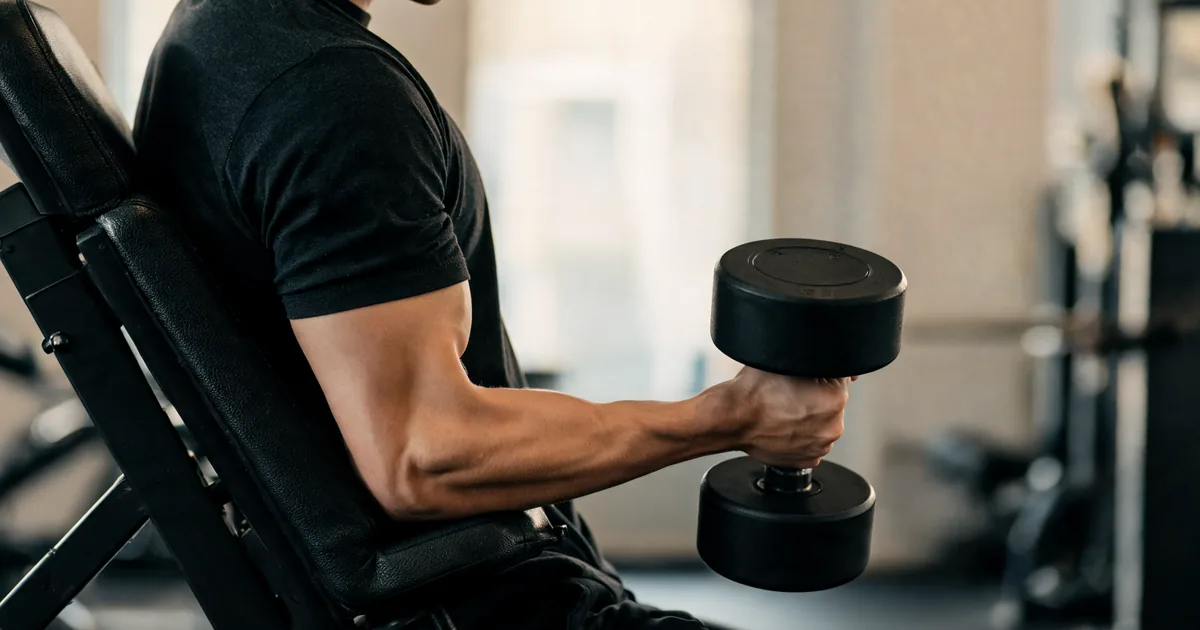
Lifting weights involves two distinct ways to direct your attention. External focus directs your attention toward an outside outcome, such as the path of the barbell or driving the weight upward. Internal focus directs your attention inward toward contracting and feeling the target muscle. What lifters call the "mind-muscle connection" refers specifically to this internal focus.
Moving a weight without conscious focus is often said to allow surrounding muscles to take over part of the load, while consciously focusing on the target muscle is thought to keep the stimulus concentrated on that area. Whether that extra focus translates into measurable muscle growth or strength over several weeks is what the research tested.
12.4% vs 6.9% in arms, no difference in thighs
An eight-week study examined 30 untrained college-aged men divided into two groups of 15 (internal focus and external focus) who trained three times per week on non-consecutive days. Participants completed four sets of 8 to 12 repetitions per exercise. The internal focus group concentrated on contracting the target muscle on every rep, while the external focus group concentrated solely on the outcome of the lift[1].
Ultrasound measurements after eight weeks showed that elbow flexor thickness increased by 12.4% in the internal focus group compared to 6.9% in the external focus group, a statistically significant difference. Quadriceps thickness changes, however, were similar between both groups. Isometric elbow flexion strength favored internal focus while isometric knee extension strength favored external focus, though neither reached statistical significance[1].
In practice, focusing inward on squeezing the biceps during simple single-joint curls provides a clear advantage for growth. For choosing target sets and reps, check the best rep range for muscle growth.
A different mental approach for squats
For multi-joint exercises like squats where balance and whole-body coordination are critical, motor imagery that controls the overall movement has been studied as an alternative rather than focusing on a single muscle.
A five-week study divided 100 national-level CrossFit athletes into a concentric imagery group (35 lifters), an eccentric imagery group (35 lifters), and a control group (30 lifters) during back squats performed three times per week. Lifters who combined physical squats with motor imagery achieved significantly greater improvements in both 5RM squat strength and power compared to the control group that performed physical training alone. Athletes who focused their imagery on the descending eccentric phase outperformed the concentric imagery group on 5RM workload[2].
Athletes in the eccentric imagery group reported significantly higher effort perception and task difficulty. In practical terms, instead of trying to isolate a single muscle during heavy squats, mentally rehearse the feel of the descent.
How to direct your focus across different lifts
A frequent error is chasing a localized burn during heavy compound movements where whole-body stability matters most. When managing your session effort, balance your focus rather than grinding every set to the limit, as discussed in do you need to train to failure.
- Single-joint isolation lifts: focus inward. On curls, lateral raises, and triceps pressdowns, control the weight and focus on squeezing and stretching the target muscle across 8 to 12 reps.
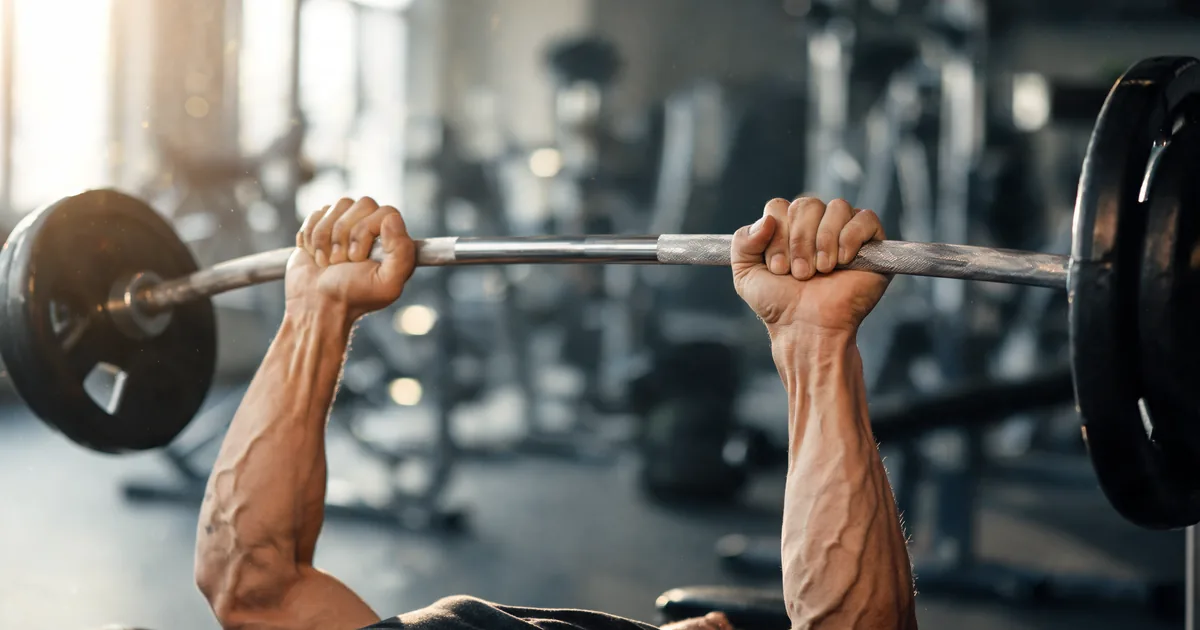
- Multi-joint compound lifts. Focusing on the muscle showed no clear benefit in multi-joint lifts; for squats, mentally rehearsing the descending movement has been studied instead.
- Motor imagery during lifts. Mentally focus on the descending phase of the squat as you perform the movement.
- Select an honest weight. If the weight is too heavy, you end up relying on momentum or surrounding muscles instead of feeling the target muscle contract.
What these studies leave unanswered
These findings come with clear experimental boundaries. The study showing greater arm thickness involved only 30 untrained young men over eight weeks. Because the sample was small and limited to beginners, whether experienced lifters gain the same 12.4% advantage remains unverified, and the effect did not appear in the quadriceps[1].
The CrossFit squat study evaluated 100 elite athletes over five weeks, measuring only 5RM strength and power without tracking changes in muscle thickness. Those results cannot confirm whether motor imagery stimulates greater hypertrophy[2].
How Muscle Today helps. Muscle Today focuses on the basics that matter most — your sets, recovery for 34 muscles, protein, and sleep — and every number links to its sources.
This article is general information for healthy adults and is not medical advice. If you have pain or an injury, stop training that area and talk to a qualified professional.
References
- Schoenfeld et al. (2018) Differential effects of attentional focus strategies during long-term resistance training.. Eur J Sport Sci PubMed
- Piveteau et al. (2025) New insights on mind-muscle connection: Motor imagery concomitant to actual resistance training enhances force performance.. J Sci Med Sport PubMed