ArticlesRecovery
Does Sleep Affect Muscle Growth?
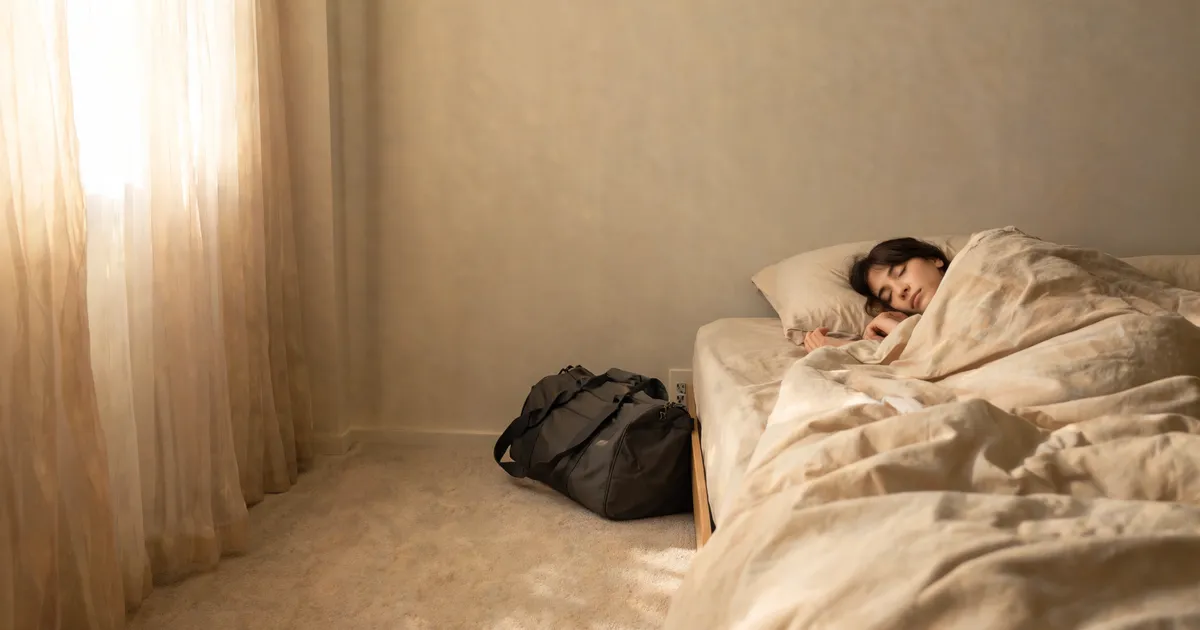
Short answer: yes. Sleeping six hours or less makes workouts weaker, a sleepless night slows the muscle-building process, and short sleep while dieting changes what kind of weight you lose. Aim for at least seven hours most nights.
How much sleep is enough
A joint consensus from the American Academy of Sleep Medicine and the Sleep Research Society recommends that adults sleep seven hours or more per night on a regular basis[1]. It is a general health guideline, not one written for lifters, but the training research below points the same way.
Short sleep, weaker workouts
A meta-analysis of 69 studies found that sleeping six hours or less before testing lowered exercise performance by about 7.6% on average — and strength was affected too, not just endurance (most participants were men)[2]. The effect was most consistent when people were kept awake all night or woken up early. In practice, that can mean fewer reps at the same weight, which over weeks could mean less training stimulus.
A sleepless night slows muscle building
In a controlled study, one night without sleep lowered muscle protein synthesis — the process that builds and repairs muscle tissue — by about 18% the next day compared with a normal night[3]. In trained women, nine nights of restricted sleep (five hours) changed how their muscles responded to resistance exercise[4]. One bad night will not erase your progress, but a habit of short sleep probably works against it (few studies have measured long-term muscle growth).
Sleep matters even more when you are dieting
When 10 adults with overweight followed the same reduced-calorie diet for two weeks, sleeping 5.5 hours instead of 8.5 hours meant they lost about half as much fat, and more of the weight they lost came from lean mass instead[5]. If you are cutting and trying to keep muscle, sleep is one of the cheapest things you can protect.
Practical tips for lifters
- Protect seven hours or more. Plan your bedtime backward from when you need to wake up.
- After a bad night, adjust instead of skipping. Keep the session, but stop sets a little further from failure, or move your hardest workout to another day.
- Do not judge a single workout. If your lifts are down and you slept poorly, that is expected — look at the trend over weeks.
- Recovery takes longer when sleep is short. See how long muscles take to recover.
How Muscle Today helps. You can log sleep in the app or import it from other health apps. Muscle Today uses it in the recovery estimate for 34 muscles, so a short night shows up as a slower recovery. Every number links to its sources, and estimates are roughly ±25%.
This article is general information for healthy adults and is not medical advice. If you have ongoing trouble sleeping, talk to a qualified professional.
References
- Watson NF et al. (2015) Recommended Amount of Sleep for a Healthy Adult: A Joint Consensus Statement of the American Academy of Sleep Medicine and Sleep Research Society. Sleep PubMed
- Craven J et al. (2022) Effects of Acute Sleep Loss on Physical Performance: A Systematic and Meta-Analytical Review. Sports Med PubMed
- Lamon S et al. (2021) The effect of acute sleep deprivation on skeletal muscle protein synthesis and the hormonal environment. Physiol Rep PubMed
- Knowles OE et al. (2024) The interactive effect of sustained sleep restriction and resistance exercise on skeletal muscle transcriptomics in young females. Physiol Genomics PubMed
- Nedeltcheva AV et al. (2010) Insufficient sleep undermines dietary efforts to reduce adiposity. Ann Intern Med PubMed