ArticlesRecovery
Does Massage Actually Help Muscle Recovery?
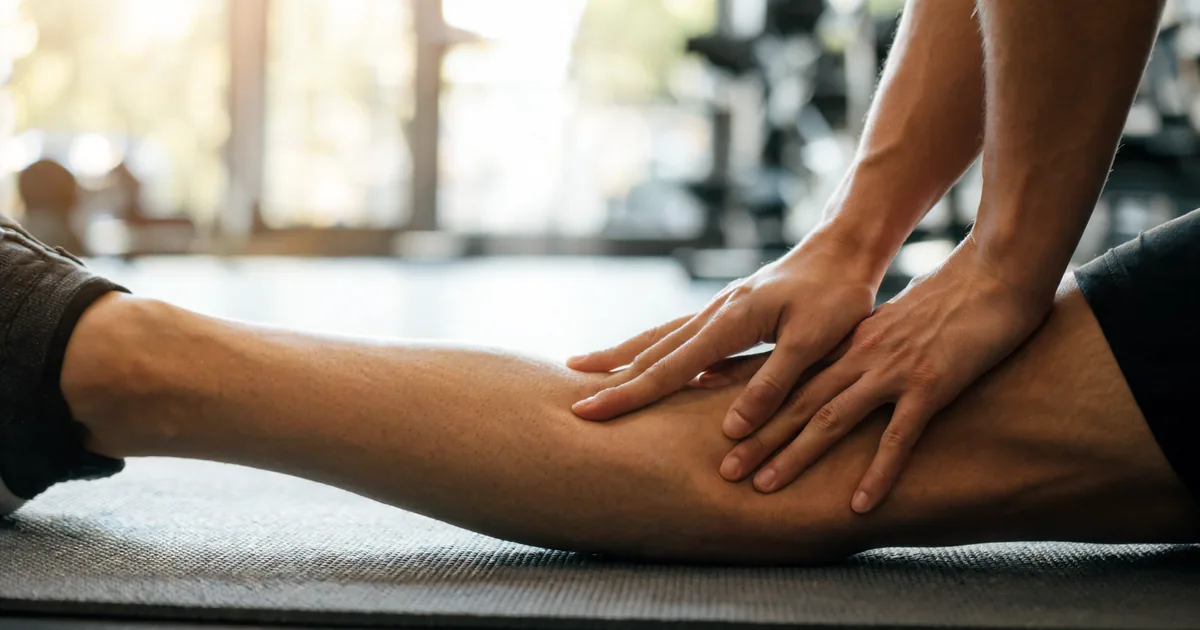
Short answer: it eases soreness temporarily, but adds very little to actual muscle recovery. A meta-analysis of 35 recovery studies (nine evaluating massage) found it reduced soreness by just 0.33 points on a 10 cm scale at 24 hours, with muscle recovery improving by only 1.87%. Use it to feel better for a short window, not as a primary recovery tool.
Feeling Less Sore Versus Actually Recovering
Rubbing down sore muscles after hard lifting is a familiar ritual. In a 2021 meta-analysis of 121 randomized physiotherapy trials (including massage, with low quality evidence) in healthy adults following induced muscle damage, getting a massage immediately post-exercise significantly reduced soreness compared to doing nothing (p < 0.00001)[1].
Perceived tenderness and structural muscle repair are two separate things. Feeling less tender does not mean the damaged muscle fibers have finished rebuilding.
The Numbers: 0.33 Points and 1.87 Percent
When researchers evaluated functional muscle performance, the measured changes were modest. A 2012 meta-analysis examining 35 trials in adults aged 18 to 60 (with nine trials specifically evaluating massage) found that massage reduced soreness at 24 hours by an average of 0.33 points on a 10 cm visual analog scale (95% CI: -0.59, -0.07). In that same analysis, muscle strength recovery improved by only 1.87% (95% CI: 0.30, 3.44)[2].
Dropping 0.33 points on a 10-point scale and muscle strength recovery improving by 1.87% are changes too small to notice during a workout. The review authors noted that this mean effect size holds minimal practical relevance. You may walk away from a session feeling looser, but your muscles cannot produce meaningfully more force.
The duration of this relief is also brief. In a randomized trial of 20 healthy women (mean age 32) who induced upper trapezius soreness through eccentric contractions (baseline soreness 5.0 on a 10-point scale, pressure pain threshold 138 kPa), a 10-minute massage significantly lowered soreness intensity (p < 0.001) and raised pressure pain thresholds (p < 0.05) at 48 hours post-exercise. However, the pressure pain threshold peaked at 20 minutes, and both benefits diminished within an hour[3].
When to Use It and What to Pair It With
A 2025 umbrella review synthesizing 29 systematic reviews and 863 trials categorized massage as providing Class III evidence for pain reduction at 24 hours post-exercise, and Class IV evidence at 48 and 72 hours[4]. Even though the effect window is short, it has practical utility when timed properly.
- Use short 10-minute sessions for post-exercise soreness. Because the reduction in pain sensitivity peaks around 20 minutes and wears off within an hour, use it for brief relief after exercise rather than expecting it to carry you through the next day (the study did not directly test pre-competition performance).
- Substitute with active banded movement. In the upper trapezius study, performing 10 minutes of active resistance band shrugs (10 sets of 10 reps) provided soreness relief comparable to 10 minutes of massage[3]. If you do not have access to massage, light banded movements offer a similar temporary window of comfort.
- Do not mistake less soreness for ready muscles. With strength recovery improving by under 2%, pushing into heavy sets too quickly invites excessive fatigue. If you are debating another hard session while still stiff, review Should You Work Out When Your Muscles Are Sore?. To plan your training split around full muscle recovery, read How Long Does It Take Muscles to Recover After a Workout?.
Can Massage Clear Away Training Fatigue?
Lifters often expect that a post-workout massage will clear away accumulated fatigue products. In reality, massage primarily alters sensory perception. It does not accelerate muscle protein synthesis, restock glycogen stores, or clear central fatigue accumulated from heavy compound lifts.
Relying on massage as a primary recovery method distracts from the fundamentals that drive adaptation. Massage is simply a supplemental option to make the waiting period feel more comfortable.
What the Studies Left Unanswered
The study designs of the cited research have distinct weaknesses. In the 2021 meta-analysis of 121 trials, heterogeneity between studies was exceptionally high at 94% (I² = 94%), and overall evidence quality was rated low[1]. Similarly, the 2025 umbrella review found that 17 of the 29 included systematic reviews suffered from critically low methodological quality, with only two rated as high quality[4].
The primary trials also examine narrow scenarios. The analysis calculating a 1.87% strength recovery boost included only nine trials on massage[2], while the active exercise comparison evaluated only 20 healthy women on a single upper back muscle over a 60-minute window[3]. Furthermore, because participant blinding is impossible in massage interventions, placebo effects inevitably influence subjective soreness ratings (VAS). None of these studies tracked long-term muscle hypertrophy or whole-body adaptations across a full training block. View massage as a short-lived tool for temporary comfort, and leave real muscle recovery to sleep and food.
How Muscle Today helps. Muscle Today focuses on the basics that matter most — your sets, recovery for 34 muscles, protein, and sleep — and every number links to its sources.
This article is general information for healthy adults and is not medical advice. If you have a medical condition or physical discomfort, consult a qualified professional before starting any massage or exercise routine.
References
- Nahon et al. (2021) Physical therapy interventions for the treatment of delayed onset muscle soreness (DOMS): Systematic review and meta-analysis.. Phys Ther Sport PubMed
- Torres et al. (2012) Evidence of the physiotherapeutic interventions used currently after exercise-induced muscle damage: systematic review and meta-analysis.. Phys Ther Sport PubMed
- Andersen et al. (2013) Acute effects of massage or active exercise in relieving muscle soreness: randomized controlled trial.. J Strength Cond Res PubMed
- Wiecha S et al. (2025) Physical Therapies for Delayed-Onset Muscle Soreness: An Umbrella and Mapping Systematic Review with Meta-meta-analysis. Sports Med PubMed