ArticlesRecovery
Do Ice Baths After Lifting Blunt Muscle Growth?
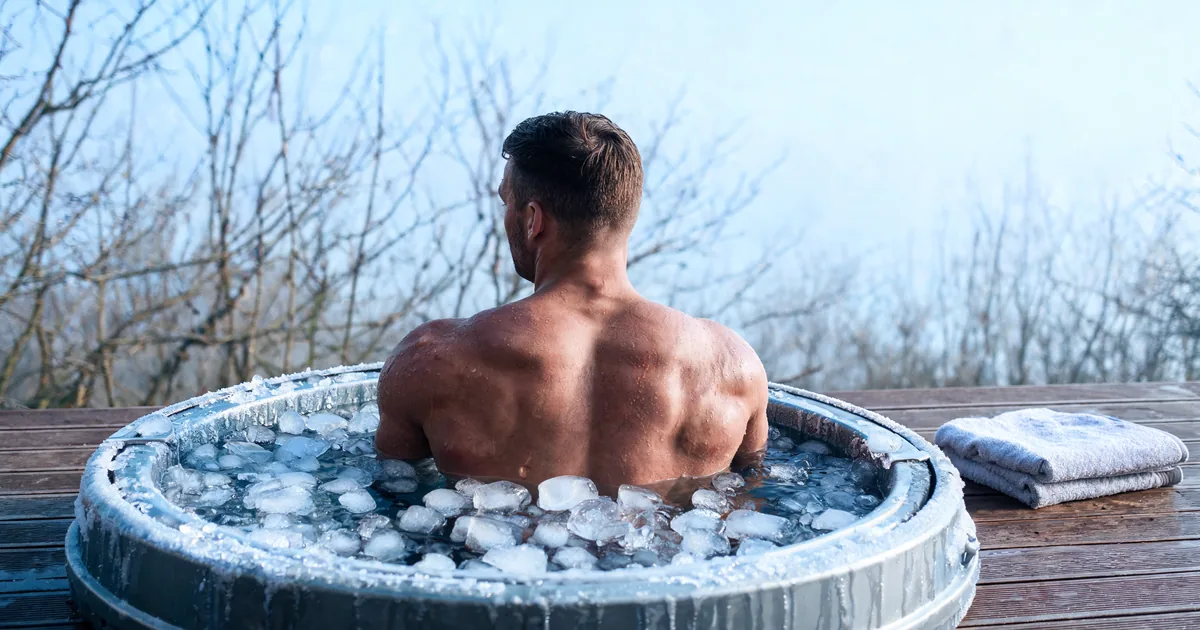
Short answer: Yes, they do. Regularly plunging into cold water after lifting moderately reduces strength gains (pooling maximal strength, isometric strength, and strength endurance) and blunts muscle growth. If your main goal is building muscle size and strength, skip the ice bath and choose passive rest or light active recovery instead.
Why ice baths became a recovery craze
Athletes sitting in tubs filled with ice water are common across sports media. The practice took off because cold water genuinely dulls post-exercise aches. A 2026 umbrella review summarizing 15 systematic reviews and meta-analyses across 161 unique studies found that post-exercise cold-water immersion reduced muscle soreness for up to 96 hours. It also lowered creatine kinase concentrations between 24 and 72 hours; while jump performance was temporarily impaired in the initial hours after exercise, power and jump performance recovery were promoted at 24 to 48 hours. Protocols of 10 to 15 minutes at 5 to 15 °C appeared to be the most effective for recovery[1].
Because soreness drops and limbs feel refreshed, many people assumed the practice must accelerate long-term muscular adaptations. That immediate relief is handy for athletes who need to compete again the next day. How to handle residual aches is also discussed in Should You Work Out When Your Muscles Are Sore?. However, soothing perception is completely separate from the process of adding new contractile tissue.
How cold water blunts muscle growth
Lifting weights triggers internal signaling cascades that instruct muscle fibres to repair and grow thicker. Cold water immersion dampens these exact signals. In a study of 21 active men who trained for 12 weeks at two sessions per week, those who spent 10 minutes in cold water after each session gained significantly less strength and muscle mass than those who performed active recovery. The active recovery group increased type II muscle fibre cross-sectional area by 17% and myonuclei per fibre by 26%, whereas the cold immersion group saw no significant changes in either measure[2].
A separate acute biopsy trial in nine active men explained why. Following active recovery, muscle biopsies taken 24 to 48 hours after exercise showed a 10% to 50% increase in satellite cell counts alongside elevated p70S6K activity, an enzyme that regulates protein synthesis. Following cold water immersion, these responses were smaller, blunting muscle growth signals and the satellite cell response[2].
The clear drop in long-term strength and size
Over several weeks of training, this interference accumulates into noticeable performance deficits. In an eight-week crossover trial with 11 adults performing leg training three times per week, 10 minutes of post-exercise cooling exerted a large negative effect on vastus medialis muscle thickness compared with passive sitting (g = 1.20). While differences in leg press one-repetition maximum gains were not statistically significant, they tended to be smaller in the cooling condition immediately post-training (g = 0.42) and at a three-week follow-up (g = 0.71)[3].
A 2021 meta-analysis pooling eight studies confirmed this across the literature. Regular cold water immersion at 15 °C or colder during resistance training produced a noticeable, moderate reduction in one-repetition maximum, maximum isometric strength, and strength endurance (standardized mean difference = -0.60), as well as ballistic power (SMD = -0.61). This indicates that regular cold water immersion noticeably blunts the strength gains accumulated over months of training. Conversely, endurance training adaptations showed no negative effects on time-trial performance (SMD = 0.00) or maximal aerobic power (SMD = -0.07)[4]. Cold water is uniquely disruptive to heavy resistance training. For broader context on how muscles mend, read How Long Does It Take Muscles to Recover After a Workout?.
When to use cold water and when to skip it
Cold water is not useless, but its value depends entirely on your training objective.
- When building muscle size and strength is your primary goal: Avoid cold water immersion right after training. Let your muscles experience the post-exercise signaling cascade, relying on passive rest or gentle mobility.
- During multi-day tournaments or back-to-back competitions: If you must perform at your peak within 24 to 48 hours, a 10-to-15-minute soak at 10 to 15 °C can help restore power and dull soreness for the next event.
- After endurance running or cycling sessions: Because aerobic adaptations were not compromised in meta-analytic reviews (SMD = -0.07), runners and cyclists can use cold soaks for comfort without blunting aerobic gains.
- Periodize your recovery: Keep ice baths out of dedicated hypertrophy phases, reserving them strictly for short periods where immediate recovery outweighs long-term adaptation.
Limitations in the evidence
Several caveats in the published literature deserve attention. The 2026 umbrella review evaluated the methodological quality of existing systematic reviews as low to critically low on AMSTAR 2, with certainty of evidence rated low to very low under GRADE due to inconsistency and imprecision across trials[1].
Individual study sample sizes are small. The crossover trial evaluating vastus medialis thickness enrolled only 11 participants[3], while the acute muscle biopsy trial enrolled only 9 active men and the 12-week training study included 21 active men[2]. In addition, the 12-week trial compared cold immersion to active recovery rather than passive rest, so part of the difference could stem from the benefits of active recovery. High-level data looking specifically at trained women or elite strength athletes remain scarce. Furthermore, water temperatures and immersion depths differed between protocols. Despite these weaknesses, the negative impact on resistance training adaptations is consistent across both individual trials and pooled analyses. If your goal is lifting heavier and getting bigger, making post-workout ice baths a regular habit works against your efforts.
How Muscle Today helps. Muscle Today focuses on the basics that matter most — your sets, recovery for 34 muscles, protein, and sleep — and every number links to its sources.
This article provides general information for healthy adults and is not medical advice. If you have underlying conditions or unusual symptoms, consult a qualified professional.
References
- Berjisian et al. (2026) Strategic Application of Post-exercise Cold-Water Immersion to Enhance Performance Recovery and Adaptation: An Umbrella Review of 15 Published Systematic Reviews with Meta-analysis.. Sports Med Open PubMed
- Roberts LA et al. (2015) Post-exercise cold water immersion attenuates acute anabolic signalling and long-term adaptations in muscle to strength training. J Physiol PubMed
- Poppendieck et al. (2021) Does Cold-Water Immersion After Strength Training Attenuate Training Adaptation?. Int J Sports Physiol Perform PubMed
- Malta ES et al. (2021) The Effects of Regular Cold-Water Immersion Use on Training-Induced Changes in Strength and Endurance Performance: A Systematic Review with Meta-Analysis. Sports Med PubMed