ArticlesRecovery
Active Recovery: Does Light Movement Help Muscles Recover?
Short answer: not really. While 20 minutes of moderate cycling improved strength recovery one hour later by 5.2% in one trial, active recovery did not reduce muscle soreness. Take a gentle walk if you enjoy moving, but beyond a small short-term strength boost, it did not beat simply resting.
What active recovery actually means
Lying on the couch on an off day is considered passive rest. Active recovery, on the other hand, means doing light movement like walking, easy pedaling, or training an unaffected muscle group. Many lifters believe that breaking a light sweat on rest days flushes out stiffness and speeds up recovery. Looking closely at the trials, however, which examined light activity immediately after exercise or the next day rather than off days in general, fatigue and muscle soreness do not respond quite like that. For a baseline on recovery timelines, see how long muscles take to recover.
What 20 minutes of light cycling showed
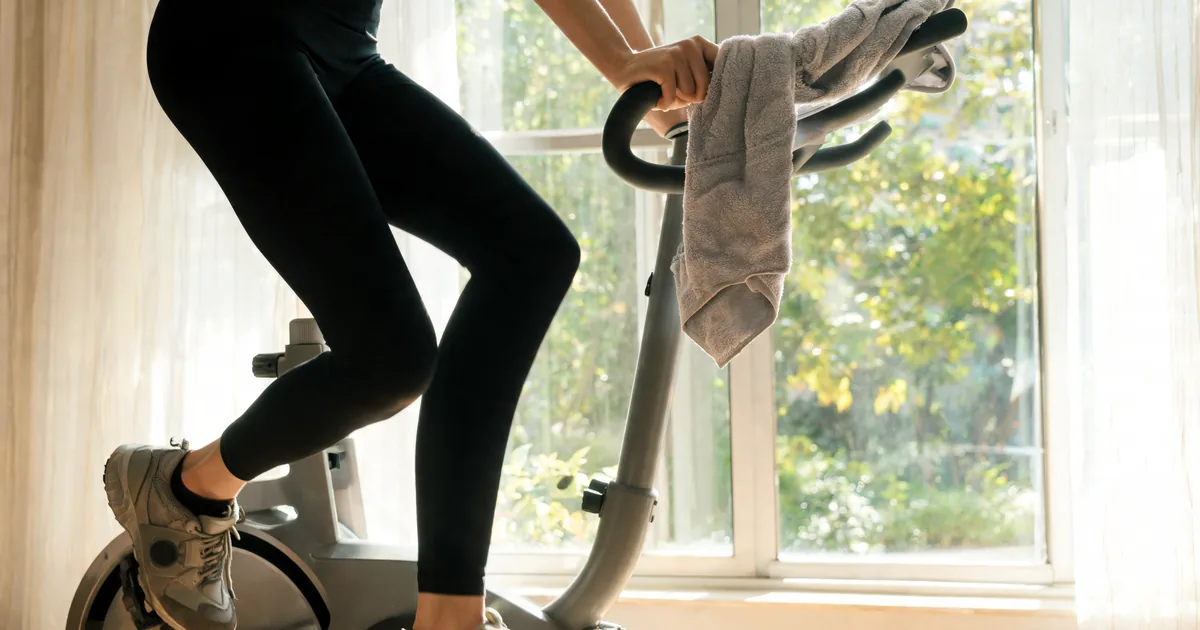
The conditions tested in the laboratory were specific. Thirty-seven physically healthy men completed four sets of ten repetitions on squats, leg presses, and leg extensions at 80% of their ten-rep maximum before testing recovery methods. Compared to sitting quietly for 20 minutes, pedaling a stationary cycle for 20 minutes at 50% of maximum heart rate improved strength recovery one hour later by 5.2%, and agility improved by 3.6% compared to baseline. Soreness measured 24, 48, and 72 hours later, however, was no lower than with passive rest[1]. In practice, this means light cardio may briefly restore force production for an immediate task, but it will not spare you tomorrow's soreness.
Another trial divided 30 adult men into three groups of ten: running, cycling, or passive rest. They performed moderate-intensity cardio immediately after knee-extensor eccentric exercise, as well as 24 and 48 hours later. Standard statistical tests found no clear difference between the three groups for delayed muscle soreness or strength recovery[2]. While one analysis hinted that cycling might offer a slight benefit, the comparison against passive rest showed no confirmed advantage. In practice, this means you do not need to run or cycle to relieve soreness the day after exercise, as resting worked about as well as running or cycling.
Training the upper body after a leg workout
One unique study used resistance training for an unworked body part as the recovery method. Participants performed five sets of 15 eccentric contractions of the knee flexors to induce leg muscle damage, followed by an upper-body lifting session the next day. Slow concentric strength recovery trended upward, but the statistical range crossed zero, meaning there may have been no actual effect. Crucially, the upper-body session did not slow the clearance of creatine kinase or delay hamstring soreness recovery[3]. In practice, training your upper body the day after a grueling leg day will not compromise leg recovery, so split routines can proceed as planned. You can also read more about working out when sore.
The mistake of moving more to erase soreness
Exercising through severe soreness in an attempt to wash away the ache clashes with broader evidence. A network meta-analysis pooled 16 randomized controlled trials involving 273 competitive endurance athletes across various recovery methods. Across delayed-onset muscle soreness (five trials), creatine kinase (four trials), and sport-specific performance (11 trials), no modality outperformed passive rest. For athletic performance, the statistical range ruled out any meaningful benefit for active recovery[4]. While a single session can produce a temporary 1-hour boost, the pooled analysis in athletes showed no advantage over complete rest.
When planning an off-day routine, keep these principles in mind:
- Skip active recovery if your goal is relieving soreness. Light cycling does not diminish muscle aches[1].
- Keep cardio around 20 minutes and very light. In the trial, participants rode at 50% of maximum heart rate for 20 minutes immediately after exercise[1].
- Take full rest. In pooled analysis, active recovery was no different from passive rest[4].
Clear limits in the existing literature
Keep the limitations of these trials in mind. The study finding a 5.2% strength bump examined 37 healthy men after a single 20-minute session and tracked performance for only one hour[1]. The running and cycling trial involved only 30 men (ten per group) and failed to show statistically significant differences in standard testing[2]. The upper-body recovery trial used a crossover design where the effect range crossed zero, making a definitive benefit uncertain[3]. Finally, the meta-analysis of 273 athletes relied on small individual trials where unblinded designs could not rule out participant expectations[4]. Rather than treating active recovery as an essential tool, view it simply as an optional way to stay gently active if you enjoy it.
How Muscle Today helps. Muscle Today focuses on the basics that matter most — your sets, recovery for 34 muscles, protein, and sleep — and every number links to its sources.
This article provides general information for healthy adults and is not medical advice. If you experience severe pain or an injury, consult a qualified healthcare professional.
References
- Arbiza et al. (2024) Effect of foam rolling recovery on pain and physical capacity after resistance exercises: A randomized crossover trial.. J Bodyw Mov Ther PubMed
- de Azevedo Franke et al. (2021) Moderate intensity cycling is better than running on recovery of eccentric exercise-induced muscle damage.. Phys Ther Sport PubMed
- Abaïdia et al. (2017) Effects of a Strength Training Session After an Exercise Inducing Muscle Damage on Recovery Kinetics.. J Strength Cond Res PubMed
- Jin et al. (2026) Physical recovery modalities in competitive and elite endurance athletes: a systematic review and network meta-analysis finding limited evidence of benefit over passive recovery.. Front Sports Act Living PubMed