ArticlesNutrition
What Should You Eat Before a Workout?
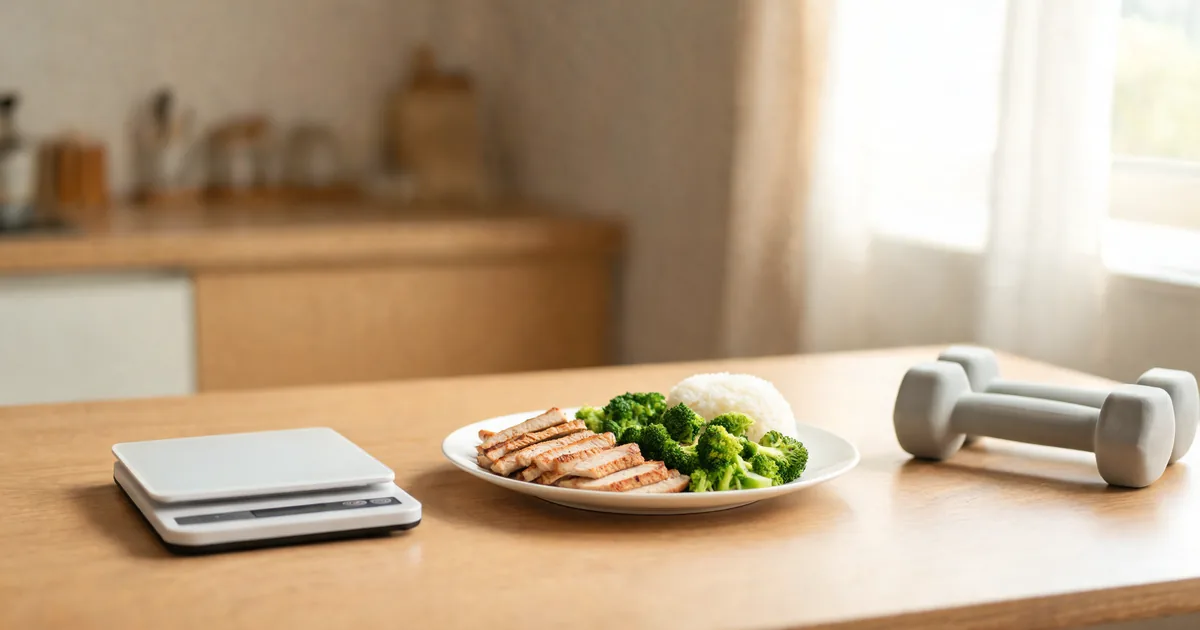
Short answer: a carb-focused meal two to three hours before training makes the biggest difference. Eating 1.5 g of carbohydrates per kilogram of body weight after an overnight fast added 10 squat repetitions compared to lifting hungry. Adding caffeine 45 minutes prior and protein around your session helps you push through hard sets.
Two goals of pre-workout nutrition
Pre-workout nutrition aims to top off muscle glycogen so you can maintain force production deep into later sets without fading early. If you have ever trained completely hungry and watched your focus and rep counts collapse, check out Fasted Workouts: Do You Burn More Fat on an Empty Stomach?.
The practical goal is simple: deliver accessible fuel into circulation without leaving heavy food sitting in your stomach while you lift.
Two hours before: how 1.5 g/kg of carbs fuels repetitions
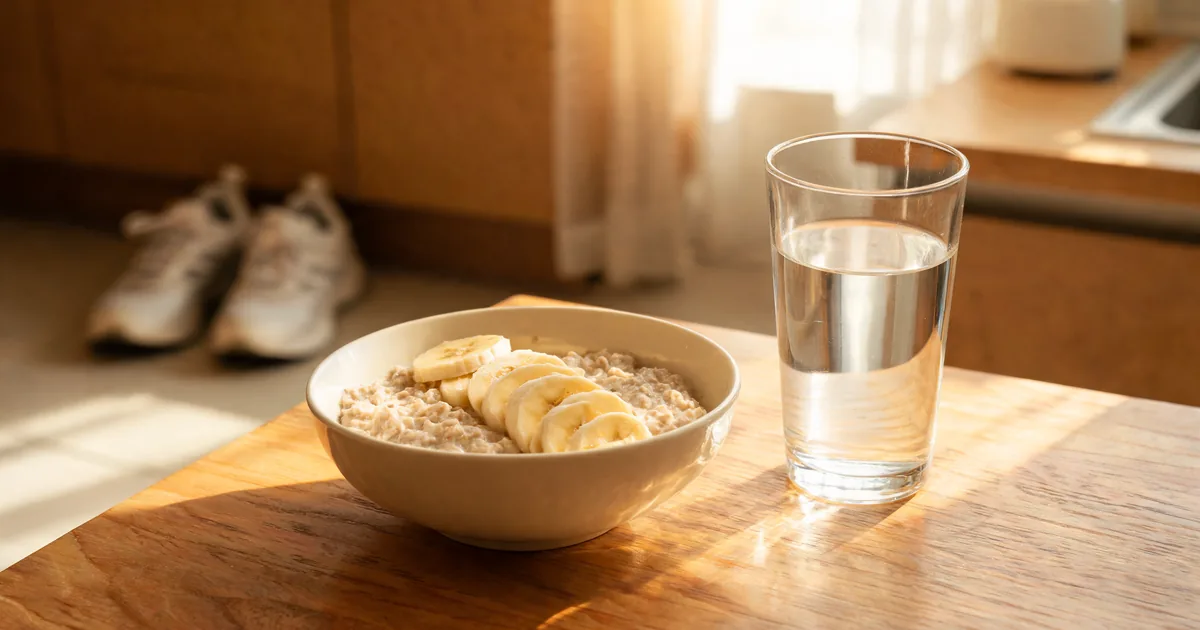
The most decisive performance boost comes from a solid meal two hours beforehand. In 16 resistance-trained men (aged 23 ± 4 years) who habitually ate breakfast, consuming 1.5 g of carbohydrates per kilogram of body weight after an overnight fast made a dramatic difference. Compared to lifting on an empty stomach, eating breakfast two hours prior raised total back squat volume from 58 ± 11 to 68 ± 14 repetitions and bench press volume from 38 ± 5 to 40 ± 5 repetitions across four sets to failure at 90% of 10RM (both p < 0.001)[1]. This is roughly a large bowl of oatmeal with bananas or rice. The meal reduced hunger and elevated fullness throughout the workout.
In contrast, slamming sugar right before lifting does not replace a digested meal. When adults fasted for three hours and completed four sets to failure at 70% 1-RM with 45 seconds of rest on the leg press after drinking 2 g per kilogram of maltodextrin immediately before exercise, carbohydrate intake failed to improve repetitions to fatigue (p = 0.18)[2]. It also produced no significant difference in muscle glycogen depletion or recovery after one hour. However, because the two studies differed in design—an overnight fast with a meal two hours prior versus a three-hour fast with immediate supplementation—they cannot be directly compared, though downing simple sugars right before exercise may not reliably substitute for a digested pre-workout meal.
45 minutes before: caffeine and multi-ingredient blends
About 40 to 45 minutes before your warmup is the window to prepare your nervous system. A meta-analysis of 14 studies in healthy adults found that acute caffeine capsule intake significantly enhanced both muscle strength and endurance[3]. Subgroup analyses showed distinct advantages: ingesting caffeine 45 minutes before exercise produced greater strength gains, and doses of 6 mg or more per kilogram were also especially effective, with lower-body strength showing an even greater improvement. In practical terms, taking an effective caffeine dose 45 minutes prior provides meaningful support for lifting heavier loads and pushing through demanding lower-body sets like squats.
Multi-ingredient formulations taken in a similar timeframe show comparable benefits. In 23 resistance-trained men, drinking a blend containing 3 g L-citrulline, 2 g beta-alanine, and 300 mg caffeine (about 3.4 mg/kg) 40 minutes before testing lifted 3-RM bench press strength (p = 0.001) and raised mean Wingate power from 8.5 ± 0.6 W/kg to 8.7 ± 0.5 W/kg[4]. Torque at 0.2 seconds also climbed markedly. Consuming a multi-ingredient pre-workout supplement 40 minutes before exercise supported upper-body strength and anaerobic power, though the individual contributions of each ingredient were not isolated.
Protein timing and practical adjustments
Protein supplementation supports strength gains, with some evidence favoring peri-workout or pre-sleep timing. A meta-analysis of 23 RCTs with 611 healthy young adults revealed that pairing protein supplementation with resistance training added 2.63 kg to bench press and 7.40 kg to squat strength[5]. Subgroup analysis showed squat benefits were clearest when interventions lasted 12 weeks or fewer and when lifters consumed protein around exercise (pre- and/or post-workout) or before bed. However, the authors emphasized that extra protein yields diminishing returns once baseline intake hits roughly 1.62 g/kg daily (How Much Protein Do You Need per Day to Build Muscle?).
Here is how to set up your routine in practice:
- 2 to 3 hours before: eat a meal with 1.0 to 1.5 g of easy-to-digest carbohydrates per kilogram of body weight, alongside lean protein.
- 45 minutes before: take your caffeine or coffee, adjusting the dose to your tolerance. If you missed your main meal, grab a light snack like a banana.
- Keep fats low: high fat and heavy fiber delay stomach emptying, leaving you feeling sluggish under the bar.
- Skip large last-minute meals: eating a heavy meal right before lifting causes digestive discomfort and makes it harder to train with full effort.
What these studies have not answered yet
These findings come with limitations you should keep in mind. The two-hour carbohydrate trial involved only 16 men who already ate breakfast regularly, so it is unclear whether chronic breakfast-skippers would see the exact same jump[1]. The maltodextrin study was limited to a single leg press test with 45 seconds of rest following a 3-hour fast[2].
The caffeine and pre-workout literature skewed heavily male, offering limited insight for female lifters; additionally, the multi-ingredient trial could not isolate the contributions of individual ingredients, and the caffeine meta-analysis did not control for differences in habitual caffeine intake[3][4]. Furthermore, the 23-study protein meta-analysis lacked standardized baseline dietary intake across trials, leaving open how much timing alone contributed compared to total daily intake[5]. Rather than treating these numbers as rigid dogma, use them as practical benchmarks to tailor your meals to your own digestion and daily targets.
How Muscle Today helps. Muscle Today focuses on the basics that matter most — your sets, recovery for 34 muscles, protein, and sleep — and every number links to its sources.
This article provides general information for healthy adults and is not medical advice. If you have an underlying condition or experience discomfort, consult a healthcare professional before changing your diet or training routine.
References
- Bin Naharudin et al. (2019) Breakfast Omission Reduces Subsequent Resistance Exercise Performance.. J Strength Cond Res PubMed
- Wilburn et al. (2020) Acute Maltodextrin Supplementation During Resistance Exercise.. J Sports Sci Med PubMed
- Wu et al. (2024) Effects of Acute Ingestion of Caffeine Capsules on Muscle Strength and Muscle Endurance: A Systematic Review and Meta-Analysis.. Nutrients PubMed
- Kaczka et al. (2020) Effects of Pre-Workout Multi-Ingredient Supplement on Anaerobic Performance: Randomized Double-Blind Crossover Study.. Int J Environ Res Public Health PubMed
- Zhang et al. (2026) Protein supplementation and resistance training-induced strength gains in young adults: a meta-analysis.. Front Nutr PubMed